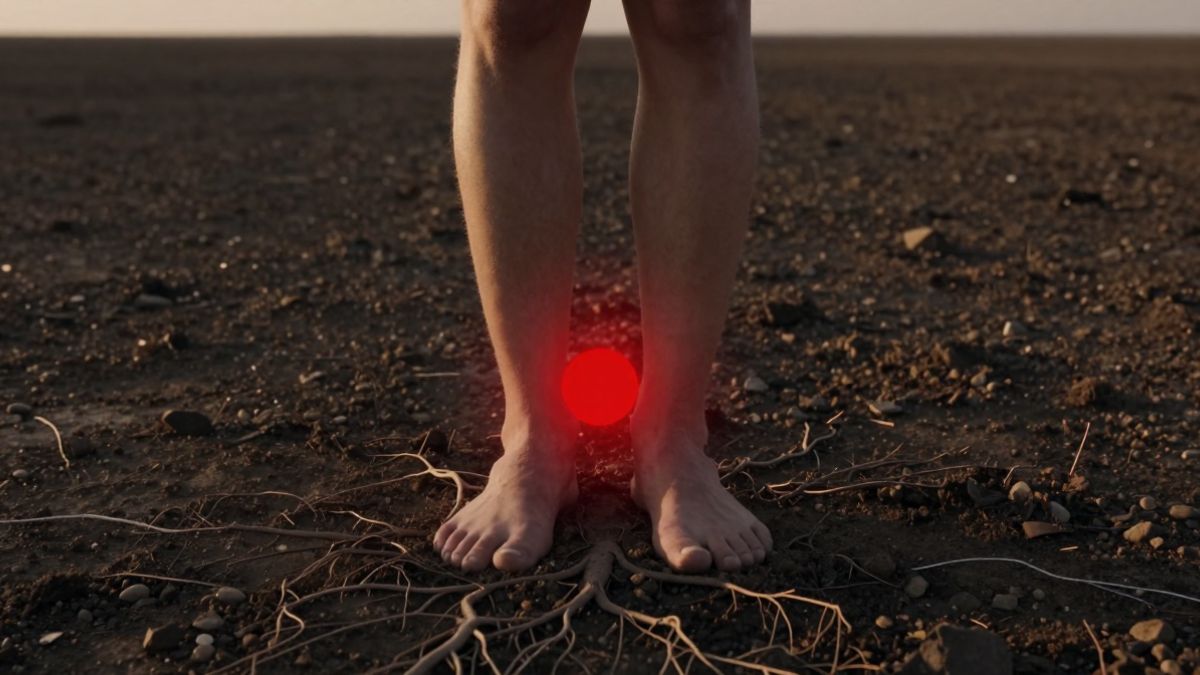
You’ve probably scrolled past the phrase “Earth chakras” and rolled your eyes. Sacred sites. Energy vortexes. Maps dotted with mystical coordinates that promise enlightenment if you just fly to Sedona or Glastonbury. It sounds like spiritual tourism at best, pseudoscience at worst. But strip away the woo-woo packaging, and what you’re left with is surprisingly practical: a framework for mapping your own stress, your own energy leaks, and the places in your life where you’re running on fumes.
The concept of Earth chakras borrows from the ancient yogic idea that the human body has seven energy centers, or chakras, running from the base of the spine to the crown of the head. Proponents of Earth chakras extend this metaphor to the planet itself, identifying specific locations—Mount Shasta in California, the Great Pyramid of Giza, Mount Kailash in Tibet—as corresponding to these energy centers. It’s not a medical claim. It’s a mythic map, a way of organizing spiritual geography.
But here’s the twist: you don’t need to book a flight to access this map. You can turn it inward. Think of the seven chakras not as mystical organs, but as a stress diagnostic tool. Each one corresponds to a fundamental human need. When one is “blocked” or “out of balance,” it’s not about energy fields—it’s about unmet needs, unprocessed emotions, or chronic stress patterns. Root chakra issues? You’re not feeling safe. Heart chakra trouble? You’re disconnected from others. Throat chakra stuck? You’re swallowing your truth.
This December, as 2025 winds down and the monsoon season has long passed, many of us in India are caught in the liminal space between year-end deadlines and the pressure to “reset” for the new year. It’s the perfect time to run a grounding scan.
What the seven-point stress map looks like
Start at the root. The root chakra, located at the base of the spine, governs survival, safety, and basic security. When it’s out of balance, you feel anxious, unmoored, or constantly bracing for disaster. Ask yourself: Do I feel safe in my home, my job, my body? Are my basic needs—food, shelter, rest—consistently met? If the answer is no, your root is flagged.
Move up to the sacral chakra, just below the navel. This one governs creativity, pleasure, and emotional flow. When it’s blocked, life feels flat. You’re going through the motions. You’ve forgotten what you enjoy. The diagnostic question: When was the last time I did something purely for pleasure, with no productivity attached?
The solar plexus chakra, located at the stomach, is your power center. It’s about agency, confidence, and the ability to act on your own behalf. A blocked solar plexus shows up as indecision, people-pleasing, or a gnawing sense that you’re not in control of your own life. Ask: Do I feel capable of making decisions that affect me? Or am I constantly deferring to others?
The heart chakra sits at the center of your chest. It’s the bridge between the lower, survival-oriented chakras and the upper, expression-oriented ones. This is where connection lives—to others, to yourself, to meaning. When it’s closed, you feel isolated, numb, or resentful. The question: Do I feel connected to the people in my life, or am I just performing connection?
The throat chakra is about expression and truth-telling. When it’s blocked, you swallow your words. You agree when you want to say no. You edit yourself into silence. Ask: Am I saying what I actually think and feel, or am I managing everyone else’s comfort?
The third eye chakra, located between the eyebrows, governs intuition and clarity. When it’s foggy, you second-guess yourself constantly. You can’t see the bigger picture. You’re lost in the weeds. The diagnostic: Do I trust my own judgment, or am I paralyzed by overthinking?
Finally, the crown chakra at the top of the head represents connection to something larger than yourself—purpose, meaning, spirituality, or simply the sense that your life has direction. When it’s disconnected, you feel aimless. The question: Do I have a sense of purpose, however small, that gets me out of bed?

The grounding scan: a seven-point check-in
You can do this anywhere. On a lunch break. Before bed. Sitting in traffic. Close your eyes if you can, or just soften your gaze. Start at the root and move up, spending thirty seconds on each point. Don’t try to fix anything yet. Just notice.
Root: Visualize the base of your spine. Does it feel tight? Heavy? Empty? Just observe.
Sacral: Move your attention to your lower belly. Is there warmth? Numbness? Tension?
Solar plexus: Notice your stomach. Is it clenched? Soft? Does it feel strong or collapsed?
Heart: Bring your awareness to your chest. Does it feel open or armored? Light or heavy?
Throat: Notice your throat. Is it tight? Does it feel like there’s something stuck there?
Third eye: Focus on the space between your eyebrows. Does it feel clear or clouded?
Crown: Imagine the top of your head. Does it feel connected to something, or like a closed door?
This isn’t mysticism. It’s somatic awareness. You’re training yourself to notice where stress lives in your body before it becomes a full-blown crisis.
Mini practices for each point
Once you’ve identified which chakras feel blocked, you can target them with simple, grounded practices.
Root: Walk barefoot. Literally. On grass, on tile, on your apartment floor. The physical sensation of contact with the ground activates the nervous system’s safety signals. If you can’t walk barefoot, try a body scan meditation focused on your legs and feet.
Sacral: Do something messy and unproductive. Dance badly in your room. Doodle with no plan. Cook a meal without a recipe. The sacral thrives on play.
Solar plexus: Make one small decision quickly. What you’ll eat for lunch. Which route you’ll take home. The solar plexus strengthens with practice, not perfection.
Heart: Reach out to one person. Not to vent, not to ask for anything, just to connect. A text. A voice note. A five-minute call. Connection is a muscle.
Throat: Journal with this prompt: “What am I not saying?” Write it all down, even if no one ever reads it. The act of articulation clears the blockage.
Third eye: Step back from the details. Go for a walk without your phone. Stare at the sky. Let your mind wander without a task. Clarity comes from space, not effort.
Crown: Identify one small thing that gives your day meaning. It doesn’t have to be grand. Maybe it’s caring for a plant. Maybe it’s a creative project. Maybe it’s showing up for someone. Purpose doesn’t require a mission statement.

When to stop and get help
This framework is a tool for self-regulation, not self-treatment. If you’re experiencing persistent anxiety, depression, or thoughts of self-harm, no grounding scan will substitute for professional support. In India, resources like the iCALL helpline (9152987821) and the Vandrevala Foundation helpline (1860-2662-345) offer free mental health support. If you’ve been stuck in the same emotional pattern for months, or if your stress is interfering with your ability to work, sleep, or maintain relationships, it’s time to talk to a therapist.
The Earth chakras map was never meant to be literal. It was always a metaphor, a way of saying: the world has sacred sites, and so do you. You don’t need to travel to them. You just need to learn where they are, and how to tend to them. This week, before the year turns over, run the scan. Notice where you’re leaking energy. Notice where you’re holding tension. And then, gently, do one small thing to bring yourself back into balance. That’s not woo-woo. That’s survival.