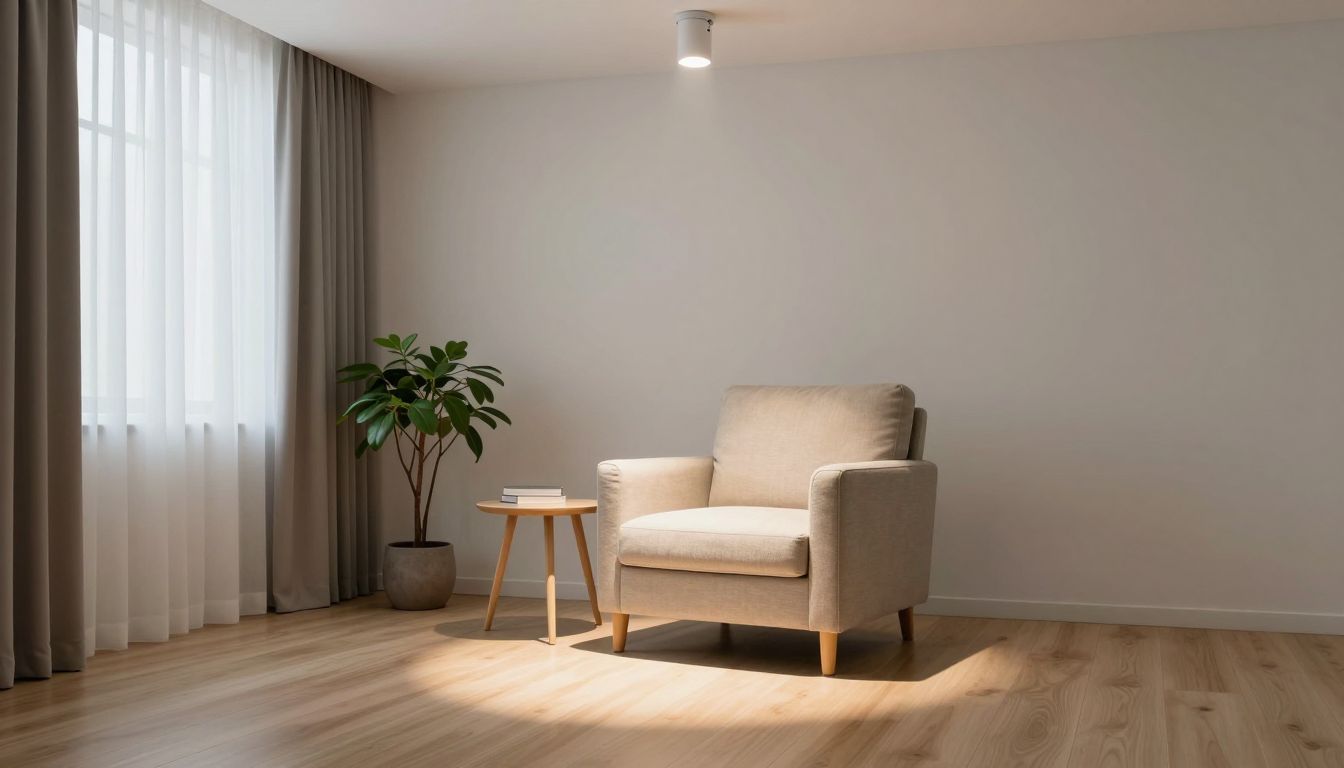
Your calming sanctuary was supposed to ease your mind, but instead you leave feeling more wired than when you walked in. The problem isn’t you—it’s that most relaxation rooms are designed for Instagram, not for your nervous system.
Designing a space that actually calms requires understanding how your body responds to sensory input. Aesthetic trends often prioritize visual drama over the low-stimulation environment your nervous system craves. Let’s fix the six most common mistakes that transform your relaxation room from a refuge into another source of stress.
Mistake 1: Overhead lighting that triggers alertness
Ceiling lights—especially bright white LEDs—signal “daytime productivity” to your brain. They activate your sympathetic nervous system, the same system responsible for your fight-or-flight response.
Replace overhead fixtures with multiple low-level light sources. Place floor lamps in corners, use warm-toned LED bulbs (2700K or lower), and add a Himalayan salt lamp or dimmable table lamp. Your goal is to create pools of soft light that mimic the golden hour before sunset.
If you must use overhead lighting, install a dimmer switch. In India’s climate, where natural light is abundant most of the year, heavy curtains or blackout blinds give you control over brightness throughout the day.
Mistake 2: Too many visual focal points
Gallery walls, patterned cushions, colorful artwork, and decorative shelves might look beautiful, but they force your eyes to constantly scan and process. This creates cognitive load—the opposite of relaxation.
Limit your room to one or two intentional focal points. A single piece of calming artwork (think soft landscapes or abstract blues and greens), a simple wall hanging, or a small indoor plant arrangement is enough.
Keep surfaces clear. One book, one candle, one small object. Your brain interprets visual clutter as unfinished tasks, triggering low-level anxiety even when you’re trying to rest.
Mistake 3: The wrong textures underfoot and underhand
Hard floors, synthetic fabrics, and cold surfaces send subtle stress signals. Your body reads comfort through touch, and smooth plastic or rough jute can feel jarring.
Prioritize soft, natural textures. A thick cotton dhurrie or wool rug anchors the space. Add floor cushions with cotton or linen covers, a soft throw blanket in organic fabric, and a bolster pillow for lumbar support.
In December’s cooler evenings across northern India, layering textures also helps with temperature regulation—another key factor in nervous-system calm.
Mistake 4: Ignoring sound pollution
Street noise, ceiling fans, or the hum of an air conditioner might fade into the background of your awareness, but your nervous system never stops processing them.
Use a white noise machine or a small tabletop fountain to create consistent, soothing sound that masks unpredictable noise. If you prefer silence, heavy curtains and door draft stoppers significantly reduce sound intrusion.
Avoid music with lyrics or complex melodies during deep relaxation. Your brain will unconsciously follow the structure. Instead, try ambient soundscapes—rain, ocean waves, or binaural beats at 432 Hz.
Mistake 5: Furniture that doesn’t support true rest
A stiff meditation cushion or a “statement” chair that looks great but feels uncomfortable will sabotage your practice. If your body is fighting to stay comfortable, your mind can’t settle.
For small spaces (common in Indian urban homes), consider these three layout options:
Layout 1: The corner nest – Place a floor mattress or thick yoga mat in one corner, add two large floor cushions against the walls, and a small side table within arm’s reach for water or a journal.
Layout 2: The window alcove – If you have a window with a wide sill or space beneath it, create a low seating area with a futon mattress or stacked cotton mattresses (gadda-style), cushions for back support, and a small bookshelf.
Layout 3: The minimal centre – In a 6×6 foot space, place one comfortable reclining chair or a bean bag in the centre, a small round rug beneath it, and a floor lamp behind it. Keep the perimeter completely clear.
Mistake 6: No ritual to signal “this is rest time”
Your brain needs a clear transition from doing-mode to being-mode. Walking into the room isn’t enough.
Create a 15-minute reset routine:
- Minute 1-2: Dim the lights, light a candle or incense (sandalwood or lavender work well).
- Minute 3-5: Sit or lie down. Close your eyes. Take five deep breaths—inhale for four counts, hold for four, exhale for six.
- Minute 6-10: Do a body scan. Starting at your toes, mentally relax each body part, moving upward to your head.
- Minute 11-15: Rest in stillness, or listen to a guided meditation or ambient sound.
Repeat this sequence at the same time daily. Your nervous system will begin to anticipate and prepare for relaxation as soon as you enter the space.
Budget shopping list for Indian homes
You don’t need expensive furniture to create a functional relaxation room. Here’s a practical starting point:
- Cotton dhurrie or yoga mat: ₹500-1,500
- Two large floor cushions: ₹800-2,000
- Warm LED bulb (2700K) and table lamp: ₹300-800
- Blackout curtain or heavy cotton curtain: ₹600-1,200 per panel
- Cotton throw blanket: ₹400-1,000
- Incense or essential oil diffuser: ₹200-600
- Small indoor plant (snake plant or peace lily): ₹150-400
Total estimated cost: ₹3,000-8,000
Many of these items are available at local home goods stores, online marketplaces, or even repurposed from other rooms in your home.
The real test: How you feel after 10 minutes
A well-designed relaxation room should lower your heart rate, soften your breathing, and quiet your mental chatter within 10 minutes. If it doesn’t, something in the environment is working against you.
Walk into your space right now and notice: Does your body instinctively relax, or do you feel the urge to tidy, adjust, or leave? That instinct is your nervous system giving you feedback.
Start with one change this week—swap your overhead light for a lamp, clear one surface, or add a soft rug. Small shifts in your environment create measurable shifts in your stress response.
Your relaxation room isn’t about design perfection. It’s about creating a space where your body remembers it’s safe to rest.